
Këngët e Hanës
Category: Visual Interpretation of Poetry
Client / Author: Sejnur Veshall
Published by: Qendra Multimedia
Format: Editorial Publication
Year: 2024
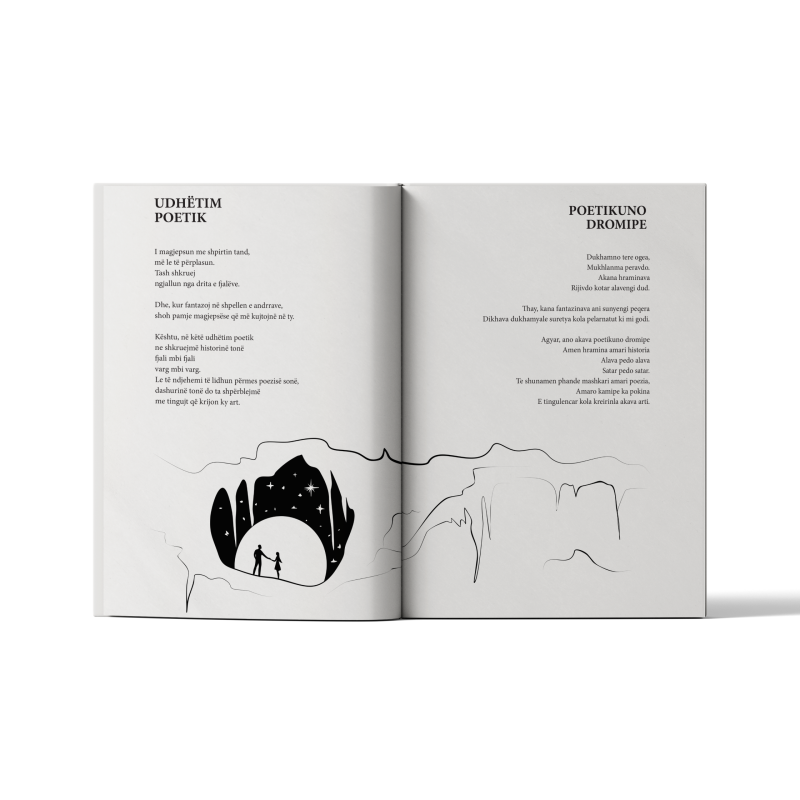
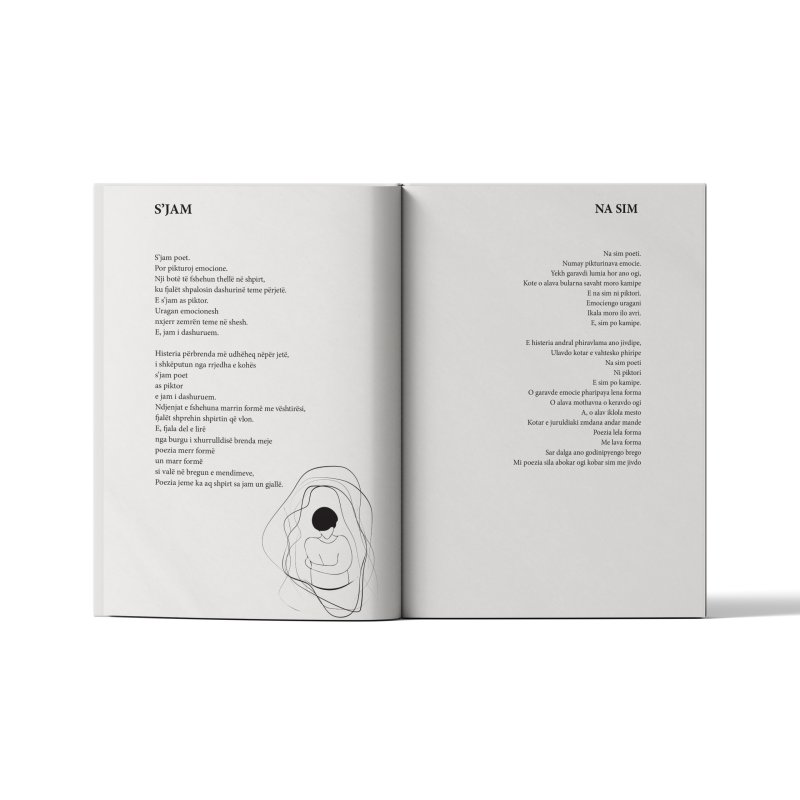
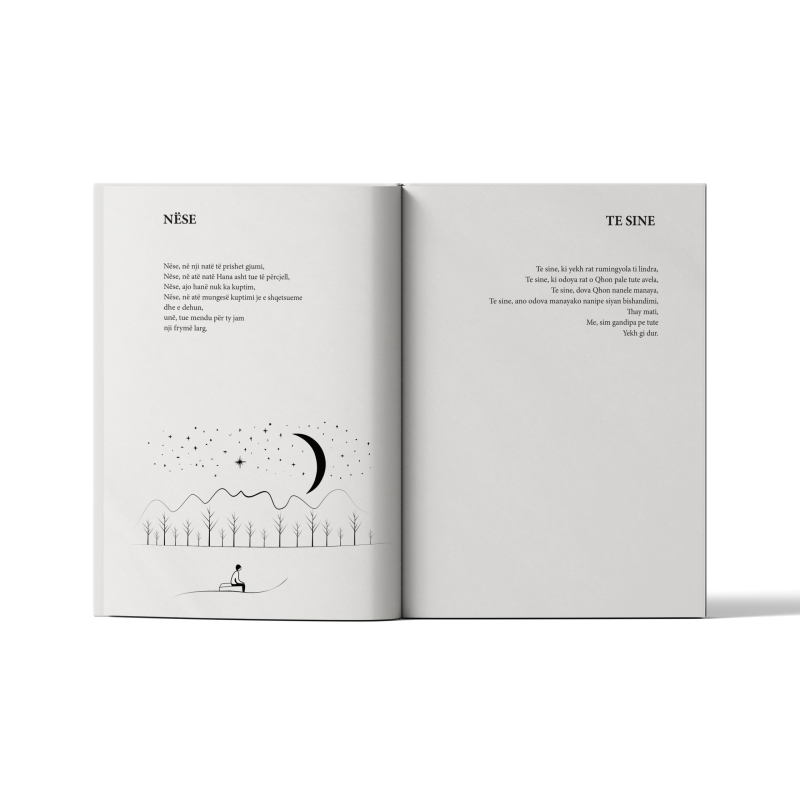
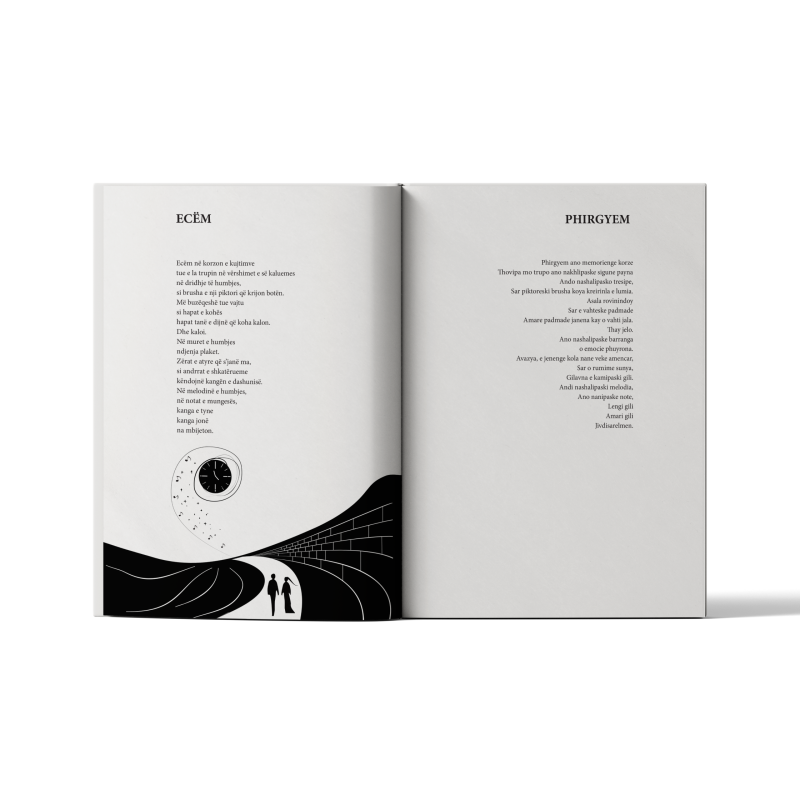
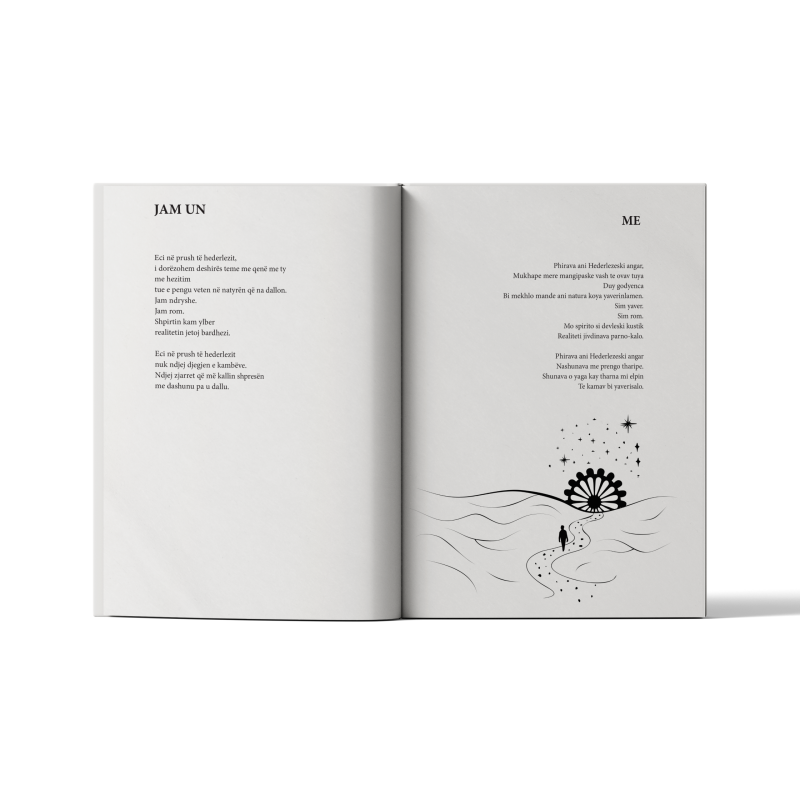
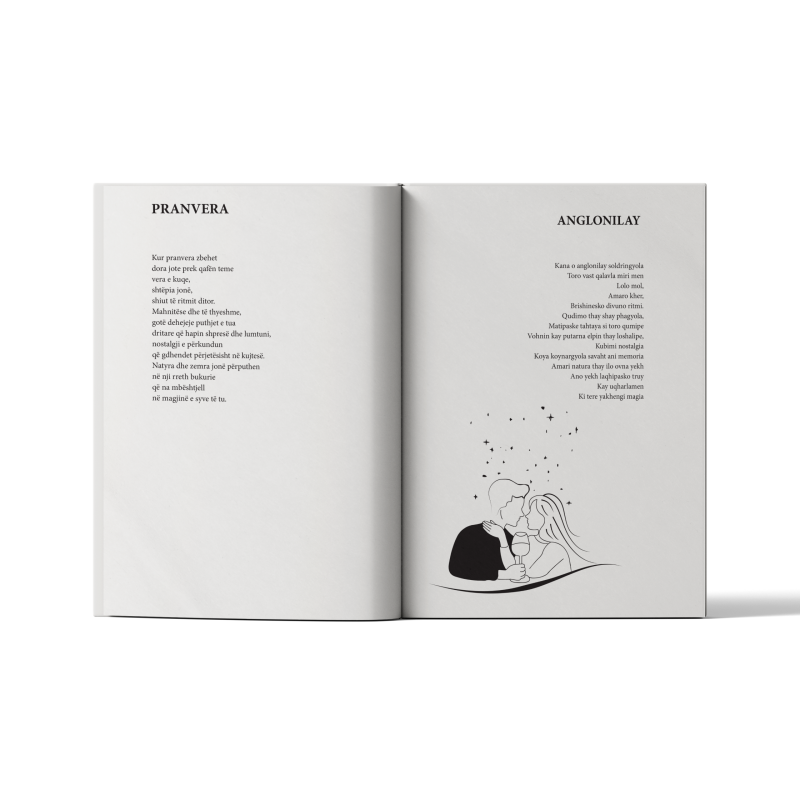
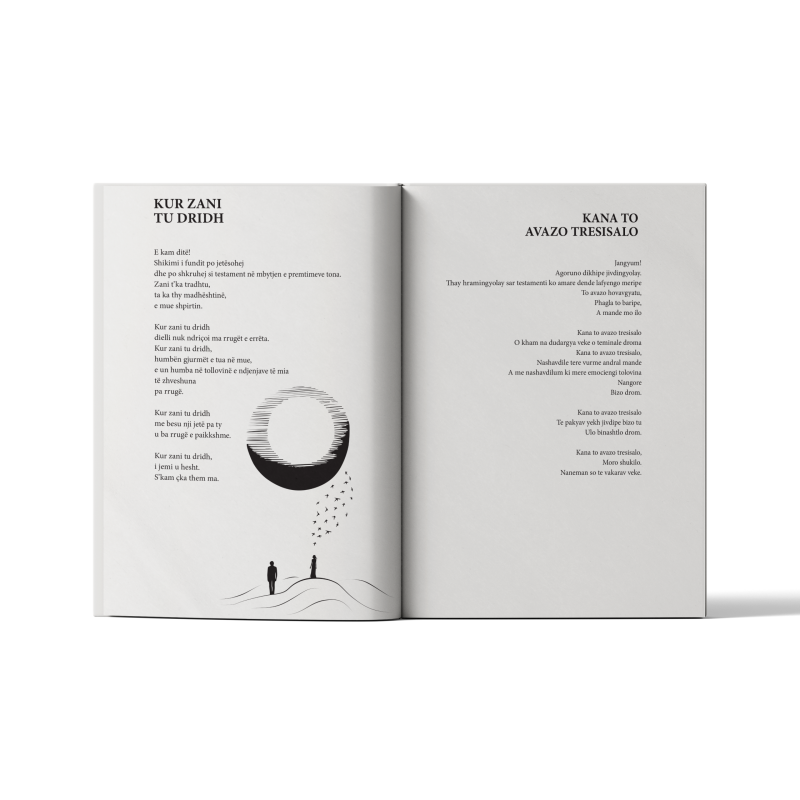
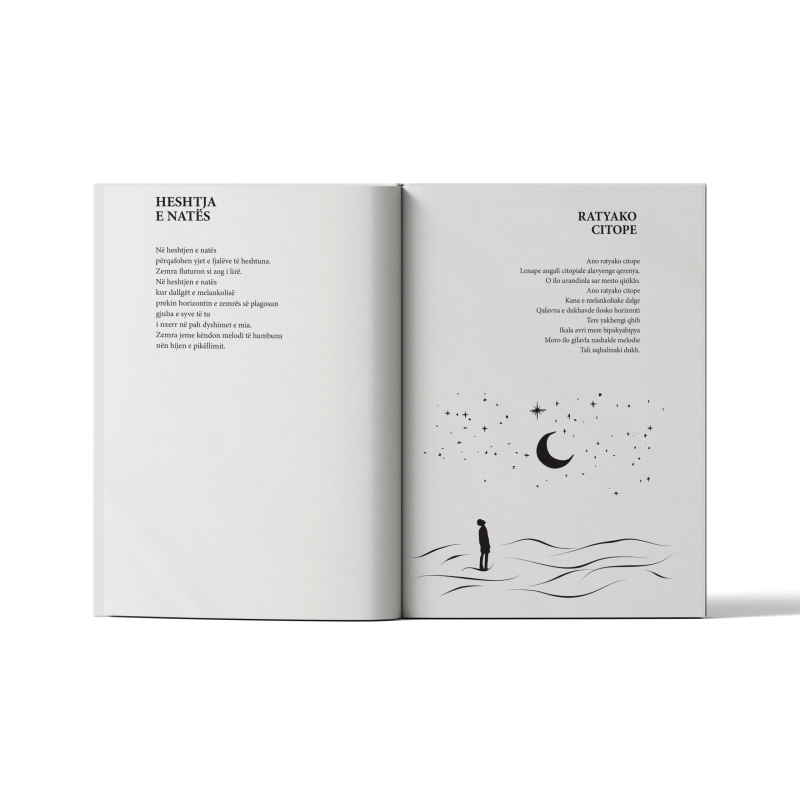
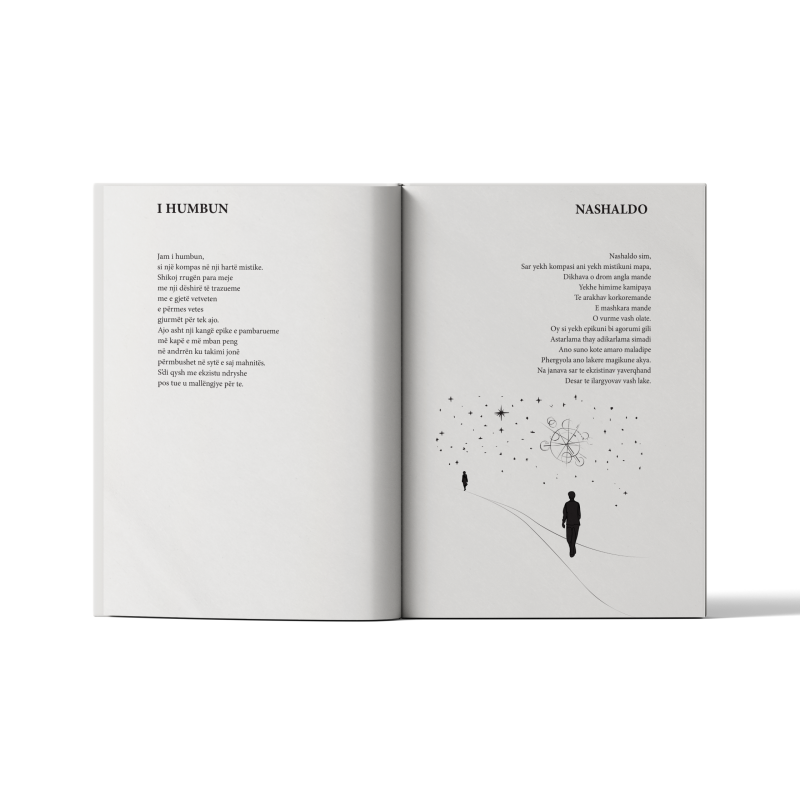
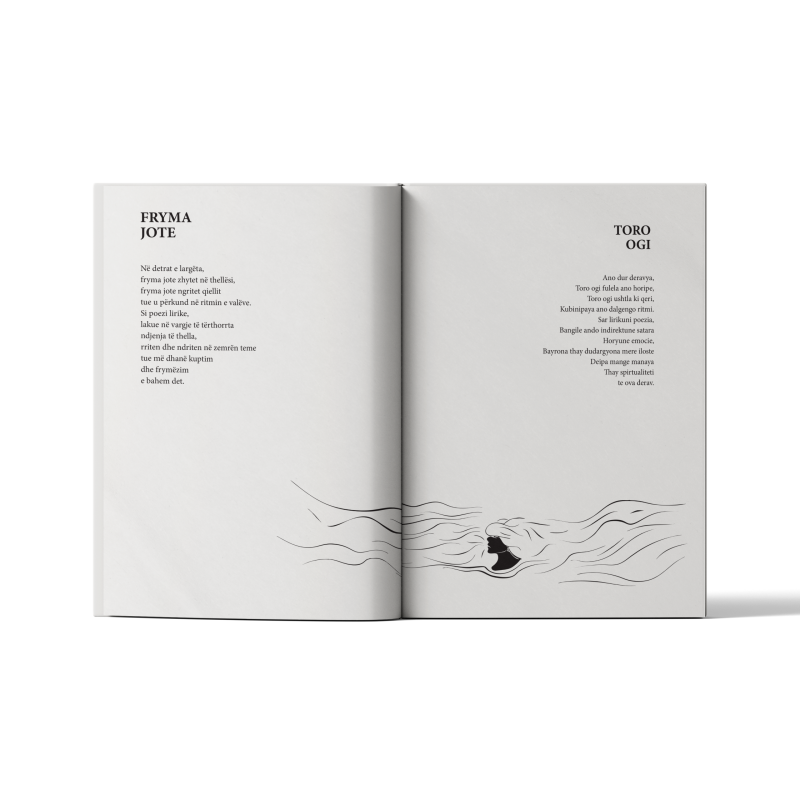
A poetic publication by Sejnur Veshall, illustrated through minimal and symbolic compositions that translate emotion, memory, and identity into visual language.
Këngët e Hanës is a poetic publication by Sejnur Veshall, published by Qendra Multimedia, where language unfolds as an intimate landscape of emotion, memory, and identity.
The book navigates themes of longing, love, fragmentation, and belonging, often oscillating between presence and absence — between what is spoken and what remains felt. The poems move fluidly across linguistic and cultural layers, creating a space where voice becomes both personal and collective.
Accompanying the text, a series of minimal illustrations reinterpret the poems through a restrained visual language. Rather than describing the content directly, the illustrations operate as quiet extensions of the poetic atmosphere — abstract, symbolic, and intentionally open.
Reduced to essential lines, forms, and gestures, the drawings echo the emotional undercurrents of the poems: a solitary figure moving through space, fragmented paths, celestial elements, and subtle references to distance and connection. The visual language resists excess, allowing absence, silence, and negative space to become active components of the narrative.
In this dialogue between poetry and image, illustration becomes a form of reading — not a translation, but a response. Each composition distills the essence of a poem into a visual moment, where meaning is not fixed, but sensed.
The project embraces a deliberate minimalism, where less becomes more — where a single line can carry the weight of a feeling, and where the void surrounding it becomes equally significant.
Rather than imposing a singular interpretation, the illustrations create a shared space of perception, inviting the reader to move between text and image, between language and intuition.
In Këngët e Hanës, poetry is not only read — it is seen, felt, and quietly inhabited.